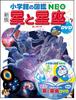
Welcome to a journey into the mysteries of the vast universe beyond our solar system.
From star clusters and nebulae to galaxies, black holes, and the edge of the universe.
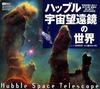
The stars of this journey are over 500 stunningly beautiful photographs and illustrations.
From newly discovered exoplanets to the expanding universe, the large-scale structures formed by star clusters and galaxies,
star formation, nucleosynthesis in stars, and the origins of planets and life, this book is packed with cutting-edge information.
A culmination of deep space astronomy, which has evolved into "visual science" thanks to the development of large ground-based and space telescopes.
◎From the "Introduction"
NASA's Voyager 2 space probe is currently flying just under 16 billion kilometers from its home planet. Launched in 1977, this unmanned probe made its closest approach to Jupiter in 1979, passed by Saturn in 1981, encountered Uranus in 1986, and met Neptune in 1989. We are currently heading towards the edge of the solar system, and beyond into interstellar space. However, even with Voyager 2's cruising speed of over 55,000 kilometers per hour, it will take tens of thousands of years to approach any star other than our sun.
The universe is vast. Unimaginably vast. Our solar system boasts an astonishing diversity of planets, moons, asteroids, and comets, but if we compare the vast universe to an ocean, even our solar system is merely a single drop of water. It's like looking at a major street, town, country, or the world from a small backyard.
(Excerpt) After a brief overview of the solar system, this book will take you further, to the realms of stars and nebulae, pulsars and star clusters, supernovae and black holes, galaxies and galaxy clusters, to the edge of the universe, and ultimately to the beginning of time. Vil Tyrion's stellar map will guide your journey across the night sky.
As we journey from this place, this moment, to distant places in the distant past, we encounter many famous celestial objects in the universe, such as Betelgeuse, the Orion Nebula, the Pleiades, and the Andromeda Galaxy. But this is not simply a "cosmic Facebook." Modern astronomers know that all these objects are interconnected. Together, they tell the epic and fascinating story of the universe's evolution—from the initial "density fluctuations" in the Big Bang to galaxy formation, star birth, planets with conditions suitable for life, and ultimately, life itself.
With the discovery of strange objects like blue rogue stars, magnetars, and quasars, and the emergence of hypotheses about mysterious cosmic components such as dark matter and dark energy, the timeline of the universe is becoming increasingly complex.
◎Table of Contents
Introduction
The Solar System
History of Astronomy
The Birth of Stars
Telescopes
Stars and Planets
The Death of Stars
The Milky Way Galaxy
Space Telescopes
Local Group
Galaxys
A Window to the Universe
Galaxy Clusters
The Universe
Star Charts
Photo and Illustration Credits
Index


 Geld zurück bei Nichtlieferung



![Tiefsee [Die seltsame und bunte Welt der Tiefsee]](https://img.joomcdn.net/624e20f7c87e3c973264f351fbc763f0e061038e_84_100.jpeg)