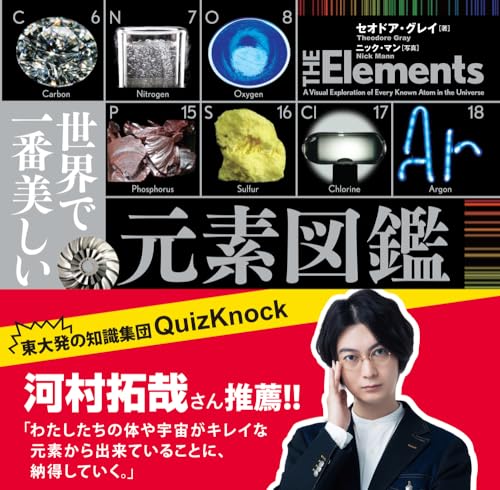
An encyclopedia of elements featuring beautiful photographs of the 118 fundamental elements that make up our world.
Includes the new element "nihonium"!
This book introduces the 118 fundamental elements with a wealth of beautiful, full-color photographs.
This best-selling book has sold 1.2 million copies worldwide and 300,000 copies in Japan.
This book is the most comprehensive portrait of all the elements in the universe, and can be considered an encyclopedia of the origins of the universe.
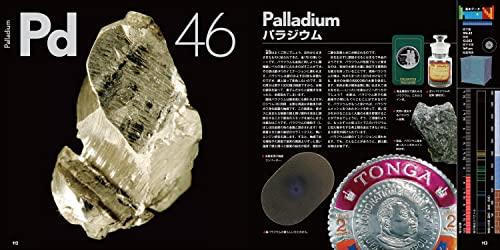
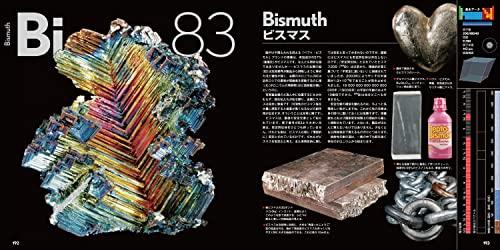
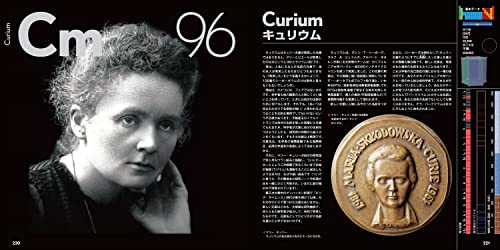
Beautiful photographs of each element are presented alongside representative examples of compounds and applications seen in everyday life.
The scientifically informed commentary is full of humor and offers surprising anecdotes about the discovery, properties, and uses of each element.
The scientific data is detailed, and the beautiful periodic table at the end is a must-see.
Combining three features: humorous scientific essays, beautiful photographs, and the latest element data, this book is a must-have for researchers, teachers, libraries, junior and senior high school students, and all science fans.
Testimonials
Oliver Sacks
(Neurologist, Author of "Awakenings" and "Uncle Tungsten")
Author Theodore Gray has a passion for the periodic table, and his collection rivals any museum.
With characteristic wit, erudition, and, above all, stunning photography,
he provides endless examples of the unique properties and uses of elements—from the familiar to the extraordinary.
Beautiful to look at and enjoyable to read, this book is more than just a guide to the elements.
It is an eye-opening book that will profoundly change your perspective on the materials that make up our world.
Roald Hoffmann
(Chemist, 1981 Nobel Prize in Chemistry)
This book on the elements pales in comparison to all other books on the elements, both in terms of style and content.
The photographs, tastefully arranged against black backgrounds, are stunning.
In the accompanying short commentary, author Gray uses carefully chosen words to describe the uses of elements, delve into their history, and even offer some insightful commentary on our world.
It was truly a delight.
Introduction
The periodic table is a universal catalog of everything you could drop on your feet.
Some things in the world, like light, love, logic, and time, aren't on the periodic table, but they can't be dropped on your feet.
Everything we can sense or detect—the Earth, this book, your feet—is made of elements.
Your feet are mostly oxygen, with a fair amount of carbon added to create organic molecular structures.
This defines you as a type of carbon-based life form.
(If you're not a carbon-based life form, welcome to our planet! If you have feet, please don't drop this book on your feet.)
Oxygen is a clear, colorless gas, and three-fifths of your body weight is oxygen.
How is that possible? Elements have two faces: one in their pure state and one when they combine with other elements to form various compounds.
Oxygen is indeed a gas in its pure state, but when it reacts with silicon, it forms strong silicate minerals, a major component of the Earth's crust.
Oxygen combines with hydrogen and carbon to form everything from water to carbon monoxide to sugar.
No matter how far a compound's appearance may differ from that of pure oxygen, oxygen atoms are still present.
And they can always be converted back to a pure gas.
However, (except through nuclear decay), oxygen atoms cannot break down or split into simpler components.
It is this indivisibility that makes elements elements.
In this book, I've attempted to show you the two faces of every element.
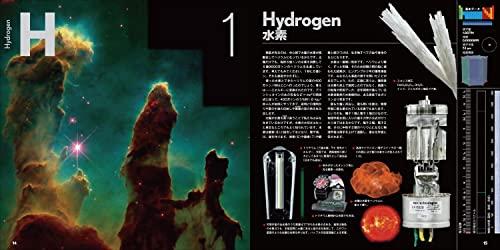
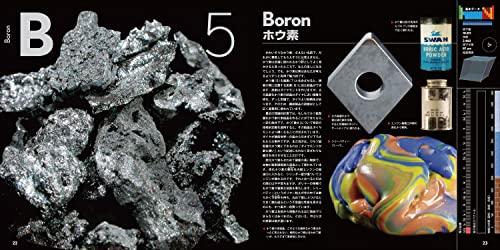
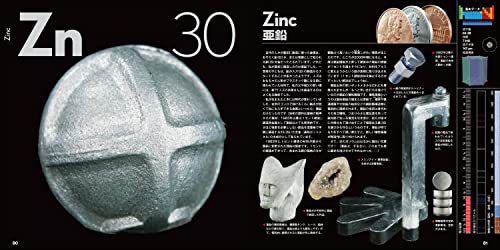
First, you'll see large photographs of pure elements (as many as are physically possible to photograph).
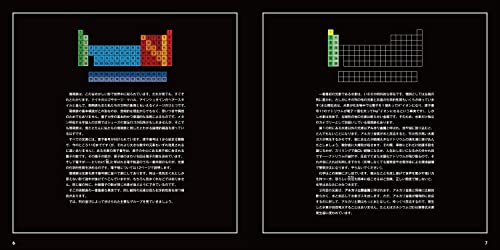
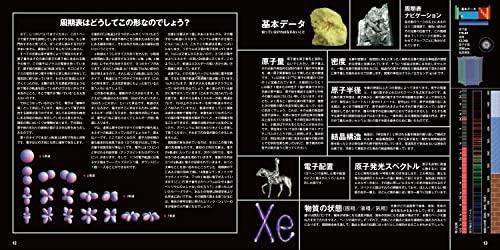
On the opposite page, you'll see how each element exists and is used in the world—its distinctive compounds and applications. Before we get to the individual elements, let's take a look at the periodic table as a whole and explain what it's all about.




 Geld zurück bei Nichtlieferung







![[Neues Frageformat] TOEIC L&R Test Ultimatives Seminar Teil 7](https://img.joomcdn.net/2cc8c897585028d6a91558fe9504a96bf2b068a6_70_100.jpeg)